Need a licensed electrician to install an EV charger at your home or business in Seattle, Shoreline, Bothell, Lynnwood, Kirkland, Bellevue, Redmond, Sammamish, or Issaquah, Washington?
Give us a call or text at? (206) 914-3243 — use the form to set up your appointment.
CARROELC982BD
& insured
5.0 ★★★★★
North Seattle
Residential and commercial, small repairs to new construction — all of it priced up front and done to code.
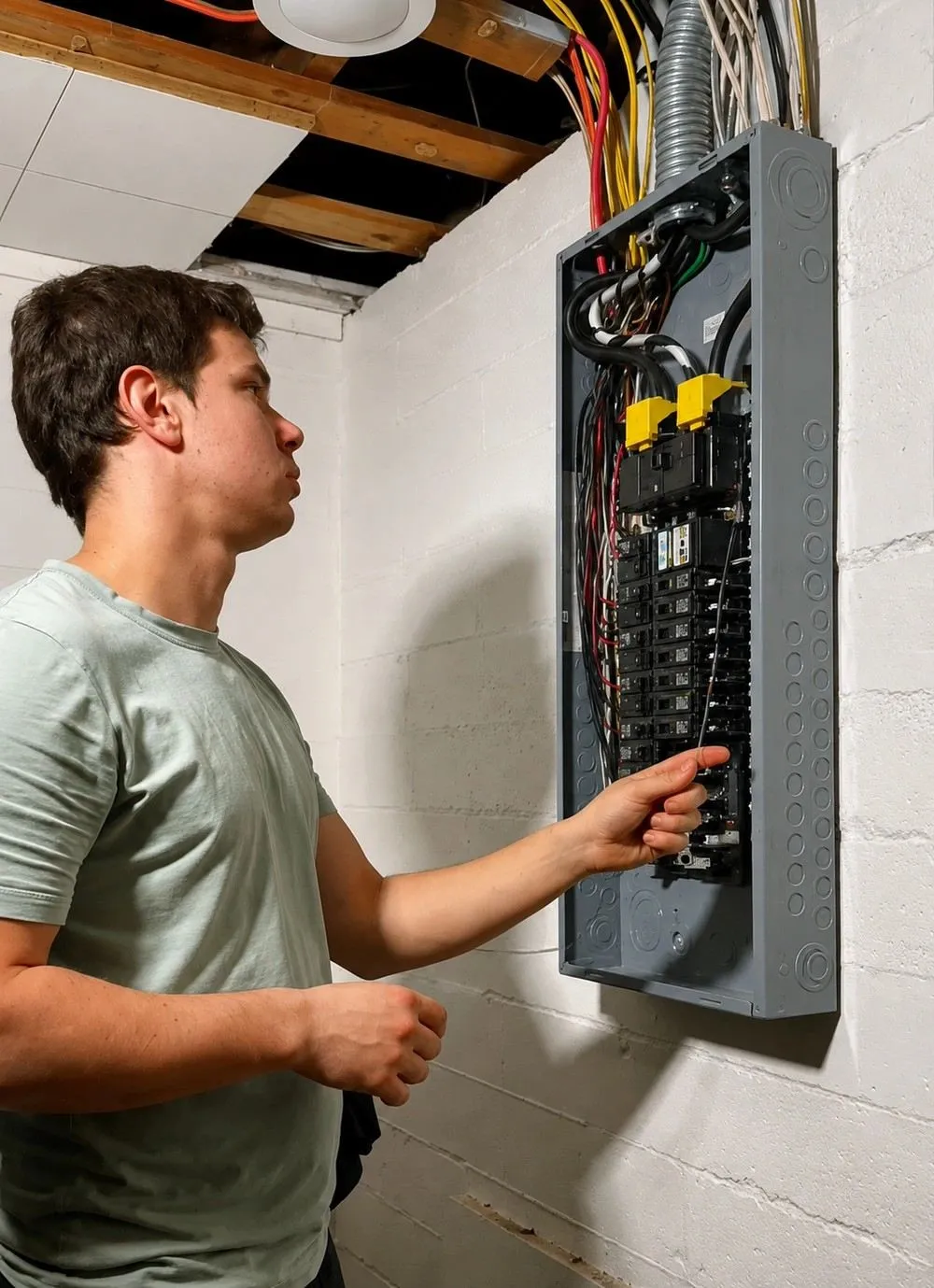
Old fuse boxes and crowded panels replaced with clean, labelled service that handles what your house actually draws.
125A to 200A, meter base and mast included. We coordinate the utility shutdown so you’re not without power longer than six hours.
Kitchens, basements and whole-house renovations. Knob-and-tube removed, new circuits run, everything photographed before the drywall goes up.
Level 2 home charging on a dedicated 240V circuit. Sized for your car and your panel, permitted and inspected.
Tenant improvements, new builds, lighting and service work. After-hours scheduling so your floor keeps trading.
Breakers that keep tripping, dead outlets, flickering lights. We trace the fault instead of guessing at the drywall.
Not sure which one you need? Describe what’s happening and we’ll tell you — no charge for the answer.
An EV charger is a straightforward installation when the electrical behind it is right, and a frustrating one when it isn’t. The circuit feeding the charger, the capacity available in your panel, the length of the run from the panel to the parking spot, and the protection required at the outlet all determine whether the charger delivers full speed or trips a breaker every time the car plugs in.
Carroll Electric handles the electrical side of EV charging — dedicated 240-volt circuits, hardwired and outlet installations, panel and service evaluation, and the load calculations that determine what your home can actually support. We’re a family business and a small, hands-on crew, which means the person who quotes your job is typically the same person on site doing it. You get direct answers about what your panel will handle, what the run will cost, and which option makes sense for the car you actually drive.
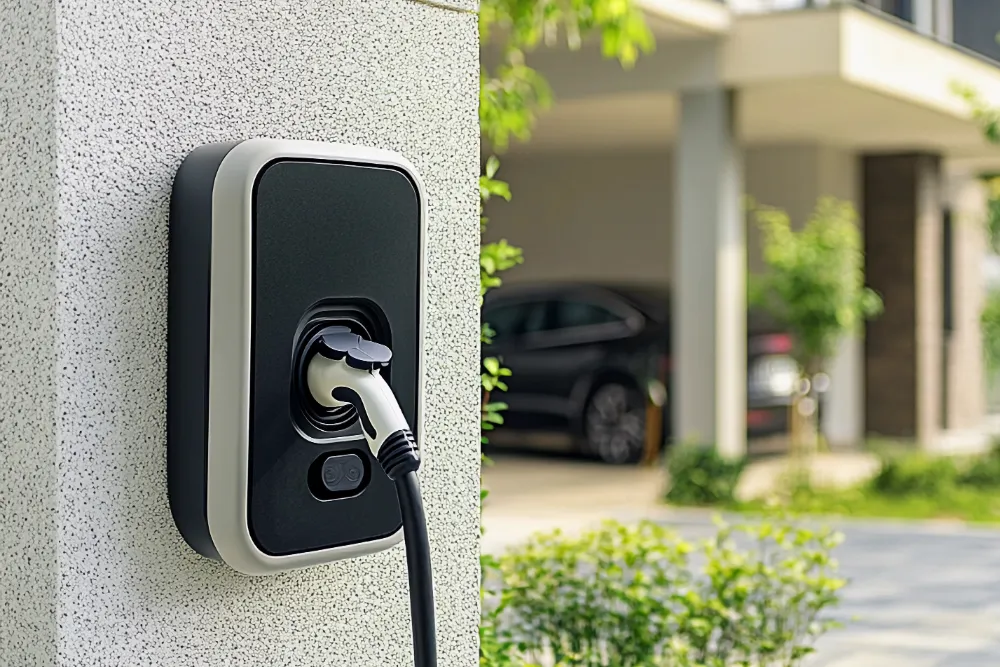
Call or text us at (206) 914-3243 to talk through your charger installation.
“I highly recommend Carroll Electric. Cameron quickly responded and scheduled the same day visit while all the other electric companies were not available at 6pm. He is very knowledgeable, and he explained the cause of the issue, then he fixed all with a short time.”
Shinobu Y. ★★★★★
Posted on GoogleTrustindex verifies that the original source of the review is Google. Great service and fast responses.Posted on GoogleTrustindex verifies that the original source of the review is Google. Carroll Electric did a great job! They were knowledgeable, efficient, hardworking, and nice to work with. I would definitely hire them again.Posted on GoogleTrustindex verifies that the original source of the review is Google. I was so impressed with Cameron and his work. He fitted me in ahead of schedule which was extremely helpful. He explained how he was going to go about the work. got on with it very quickly. He was very polite and delightful to work with and I am so grateful for his help. I recommend him highly.Posted on GoogleTrustindex verifies that the original source of the review is Google. He was skilled, efficient and worked clean. Would definitely hire again!Posted on GoogleTrustindex verifies that the original source of the review is Google. Great experience! They fixed a wiring issue fast and explained everything clearly. Honest pricing and quality work. Highly recommend!Posted on GoogleTrustindex verifies that the original source of the review is Google. Carroll Electric upgraded our panel and installed new lighting—super professional, on time, and everything works perfectly!Posted on GoogleTrustindex verifies that the original source of the review is Google. The best electrical contractor ive ever worked with. Very quick to understand our needs and perform the service work easily!Posted on GoogleTrustindex verifies that the original source of the review is Google. Super fast response. Would use them again!.Posted on GoogleTrustindex verifies that the original source of the review is Google. Professional, quick response, reasonable price.Posted on GoogleTrustindex verifies that the original source of the review is Google. Awesome local business with outstanding customer service. I recently experienced a power outage during the recent Seattle heat wave, and Carroll Electric was the only company I contacted that prioritized my situation and had a technician at my home within the hour. Truly impressive responsiveness and professionalism. Highly recommend!Verified by TrustindexTrustindex verified badge is the Universal Symbol of Trust. Only the greatest companies can get the verified badge who has a review score above 4.5, based on customer reviews over the past 12 months. Read more
Carroll Electric was built around a simple belief: customers deserve honest communication, quality workmanship, and an electrician they can trust. As a family-owned company with a young, passionate team, we’re committed to making every project straightforward — from the first phone call to the final walkthrough.
We don’t believe in confusing estimates or unnecessary upselling. We believe in showing up when we say we will, keeping our work clean, and doing every installation the right way.
“We’d rather lose a job to an honest number than win one with a vague one.”
Tyler Carroll — Manager & Founding Member
Whether it’s a panel upgrade, remodel rewire, EV charger installation, commercial project, or troubleshooting a difficult issue, every job receives the same attention to detail, craftsmanship, and respect.
We’re proud to be a local family business serving our community with transparency, professionalism, and electrical work built to last.

Family
Owned
4
On the crew
Licensed
Bonded & insured
5.0★
Google rating
Cameron Carroll
Owner / Electrician
Tyler Carroll
Manager / Founding Member
Slater Bradley
Original Electrician
Michael Martinez
Apprentice
An EV charger is a straightforward installation when the electrical behind it is right, and a frustrating one when it isn’t. The circuit feeding the charger, the capacity available in your panel, the length of the run from the panel to the parking spot, and the protection required at the outlet all determine whether the charger delivers full speed or trips a breaker every time the car plugs in.
Carroll Electric handles the electrical side of EV charging — dedicated 240-volt circuits, hardwired and outlet installations, panel and service evaluation, and the load calculations that determine what your home can actually support. We’re a family business and a small, hands-on crew, which means the person who quotes your job is typically the same person on site doing it. You get direct answers about what your panel will handle, what the run will cost, and which option makes sense for the car you actually drive.
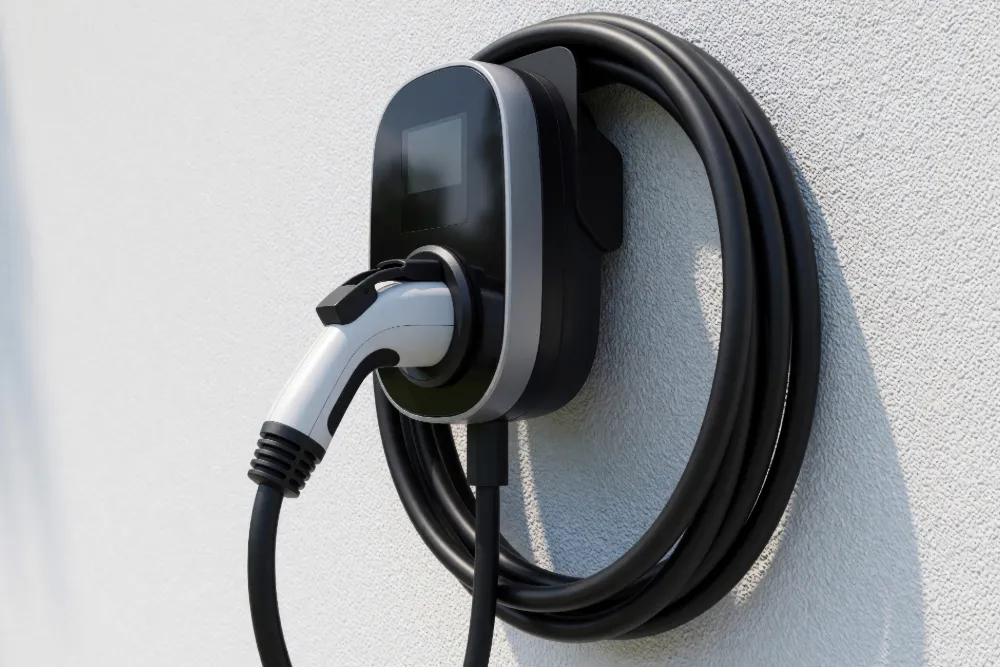
Call or text us at (206) 914-3243 to talk through your charger installation.
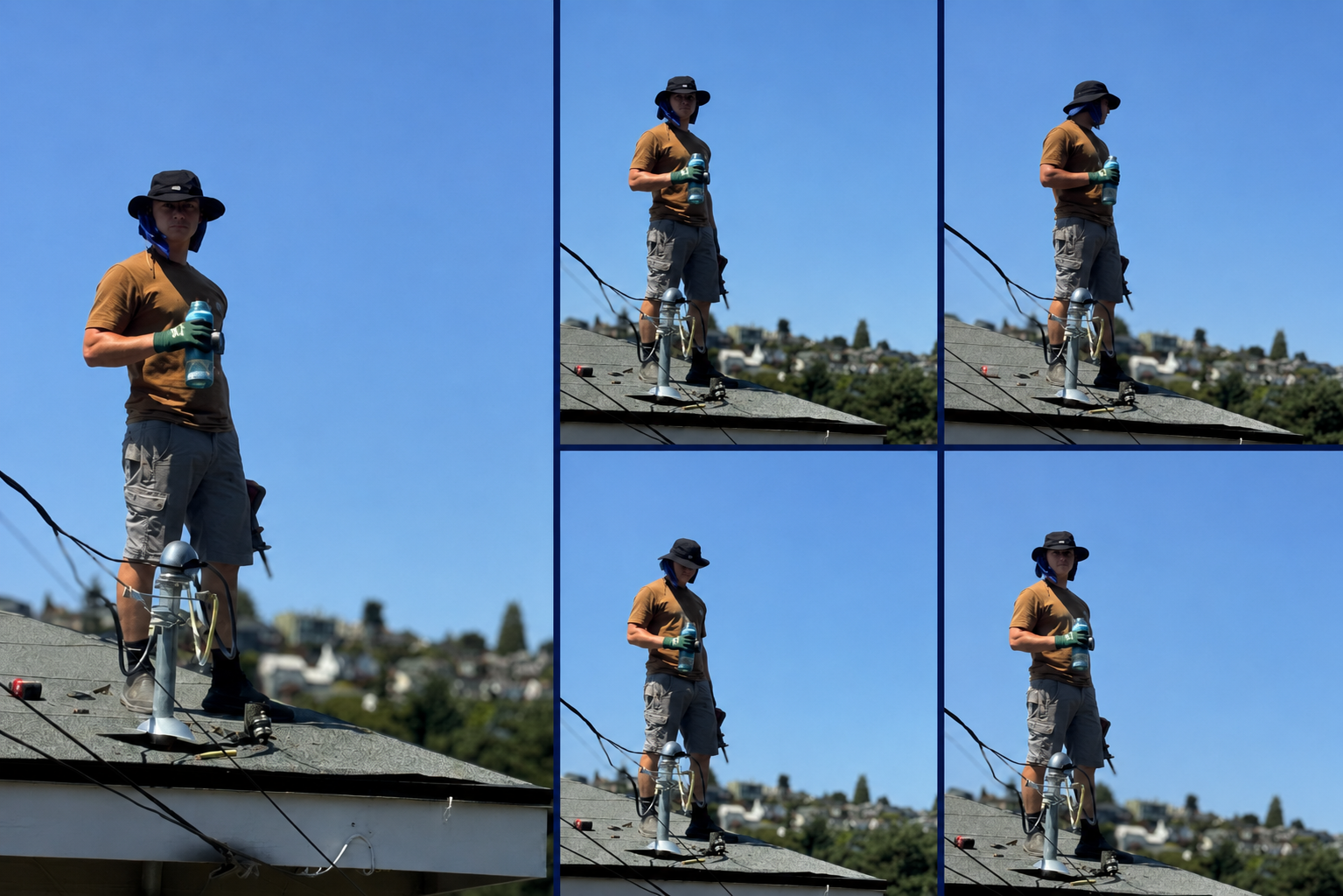
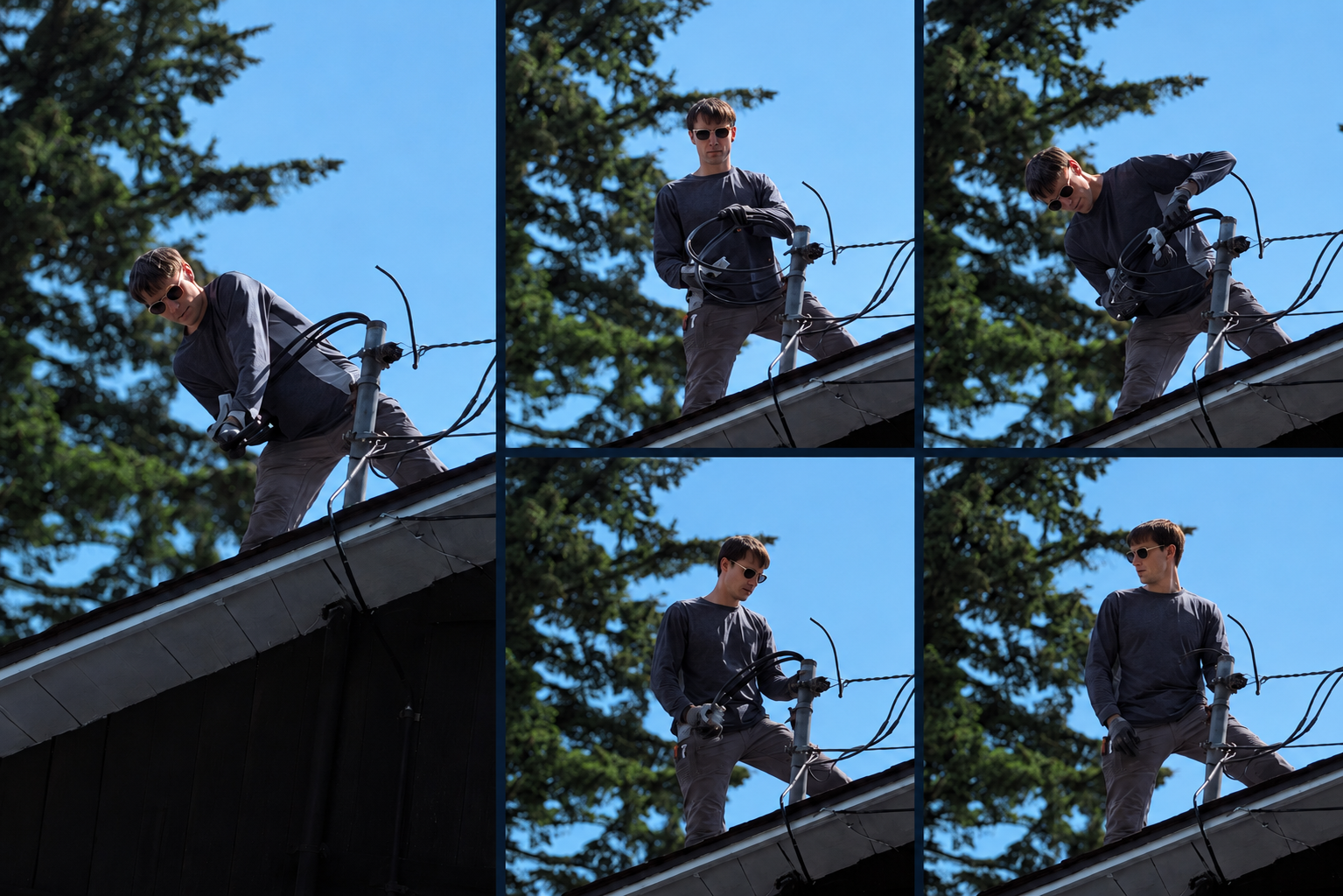
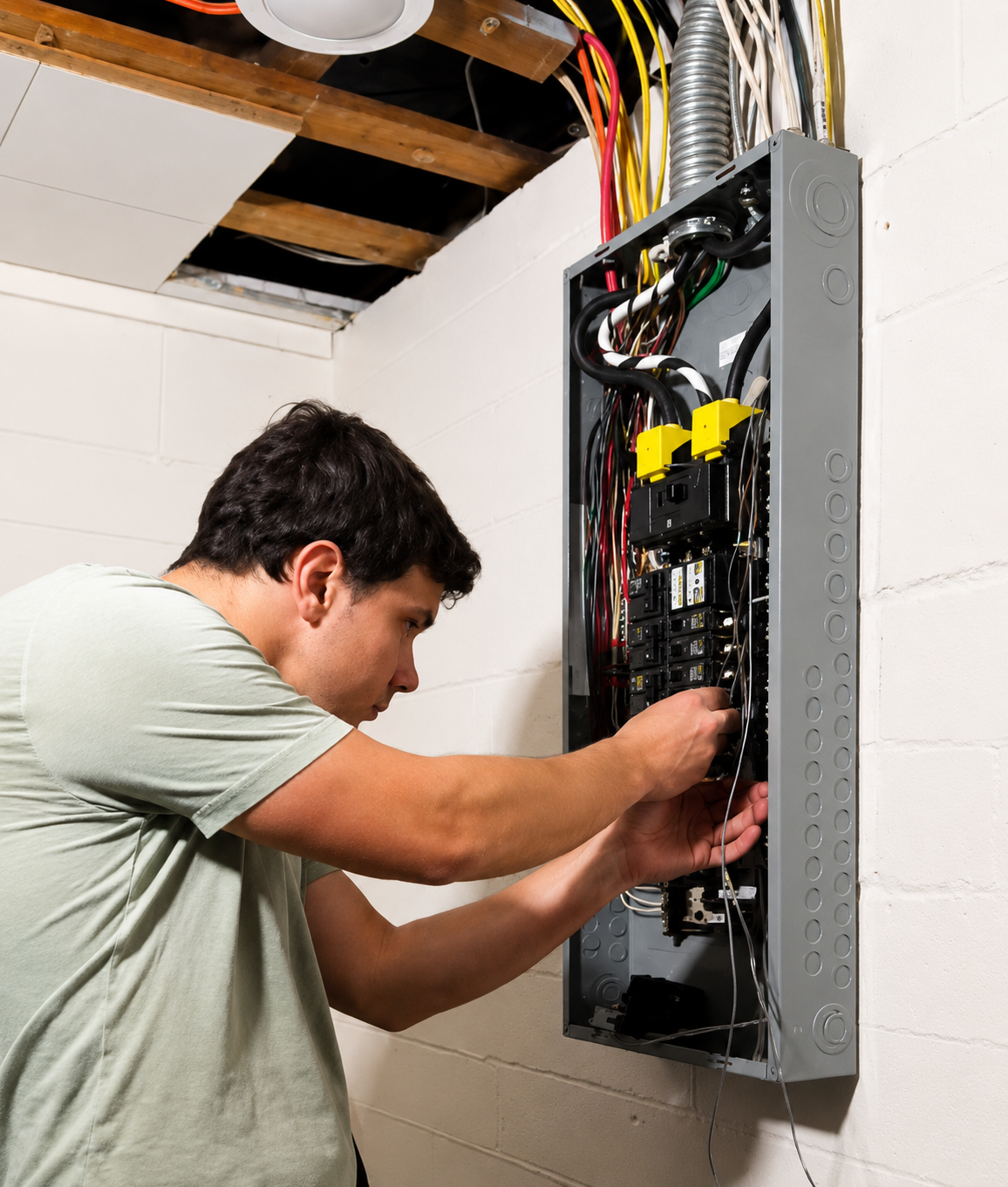
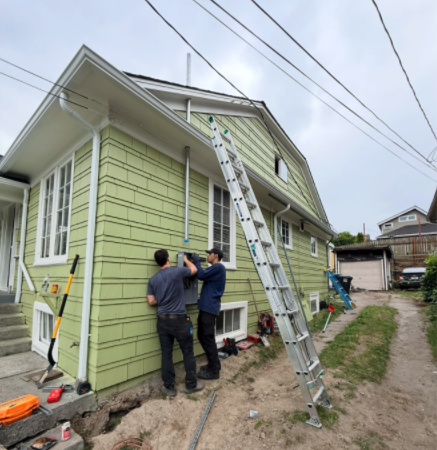
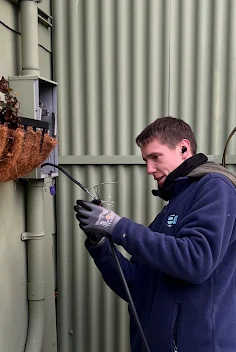
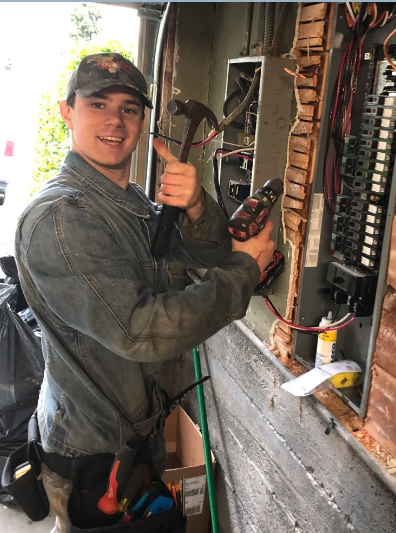
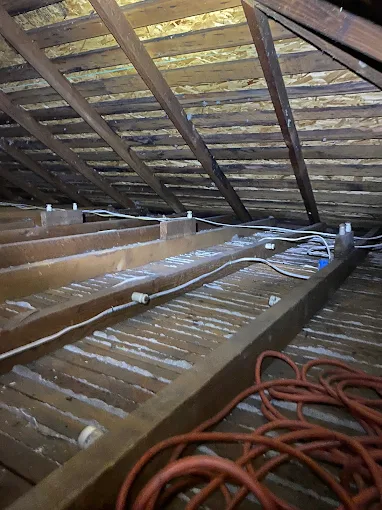
Photography is one of Carroll Electric’s strongest branding assets. We showcase our real electricians, real homes, real commercial projects, and the quality craftsmanship behind every installation.
The same questions come up on nearly every charger installation. Here’s how we answer them.
Can my panel handle an EV charger? Often yes, but it depends on your service size and how much of it is already committed. We run a load calculation rather than estimating — and if the answer is no, there are usually options short of a full service upgrade.
Should I get a hardwired charger or a 240-volt outlet? Both are legitimate. An outlet lets you unplug and take the charger with you when you move; hardwiring supports higher amperage and is required by some units. We’ll explain the tradeoff for your specific charger.
How fast will it actually charge? That depends on the circuit size, the charger, and what your car’s onboard charger accepts. A vehicle limited to 32 amps won’t charge faster on a 60-amp circuit — we’ll size to what your car can actually use, plus reasonable headroom for the next one.
Do I need to buy the charger before you come out? No. If you already have one, we’ll install it. If not, we’ll tell you what your electrical supports so you can buy something that matches.
What will it cost? You receive an itemized written estimate after an on-site assessment, with labor and materials broken out separately, so you can see how the number was reached.
Same crew, same rates, same paperwork. What changes is how we schedule around you and who we send the invoice to.
Panel upgrades, EV chargers, dead outlets, breakers that keep tripping. You get a written number before anything starts, and a call before we spend more than it.
Rough-in and trim on the date we gave you. Inspections cleared without you chasing them, and a phone call the moment anything looks like it might slip.
Tenant calls handled the same day. Certificate of insurance on file, one invoice format across every unit you run, and photos of the work sent through each time.
Tenant improvements, new builds, lighting and service work. After-hours and weekend scheduling so your floor keeps trading while we’re in there.
Kitchens, additions, whole-house rewires. Clean installs, labelled circuits, and everything behind the drywall photographed before it’s closed up.
The people who just call us when something goes wrong. We keep a record of what we’ve done at your property, so we’re not starting from scratch every visit.
We’d rather be the electrician you call for the next ten years than the one who won a single job on price. If you manage more than one property, ask about an account.
Every project follows the same process, from first contact through follow-up.
It starts with an on-site assessment. We look at your panel and available capacity, the parking location, the route and length of the run, and whether the path involves finished walls, an attic, a crawlspace, an exterior wall, or a trench to a detached structure. We also ask what you drive and what you’re likely to drive next, because sizing the circuit to the household rather than to today’s car is usually the difference between one installation and two. From that assessment you receive a written, itemized estimate separating labor and materials, before you approve anything.
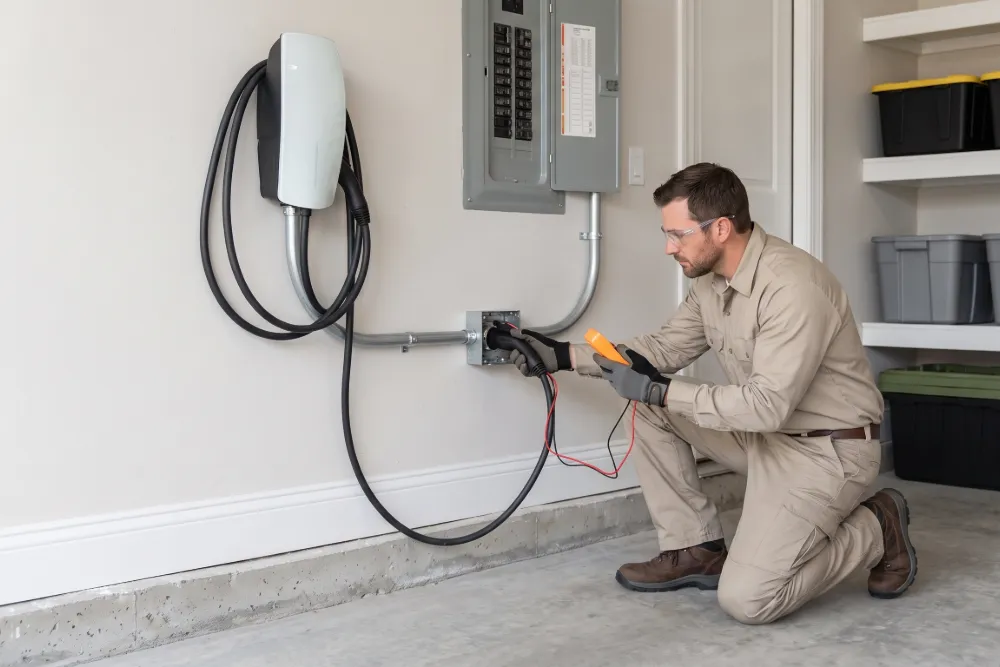
Once the work is scheduled, we arrive when we said we would. We install a properly sized dedicated 240-volt circuit, mount and connect the charger or the outlet at the right height and location for how you actually park, install the required protection, and label the panel clearly. We protect finished surfaces, clean up the work area, and keep the run neat where it’s visible — conduit that’s going to live on a garage wall for twenty years is worth running straight.
We handle permitting and inspection as part of the project. Every installation closes with a walkthrough, a live test with your vehicle to confirm the charger delivers the expected rate, documentation of the completed work, and an invoice that matches the estimate.
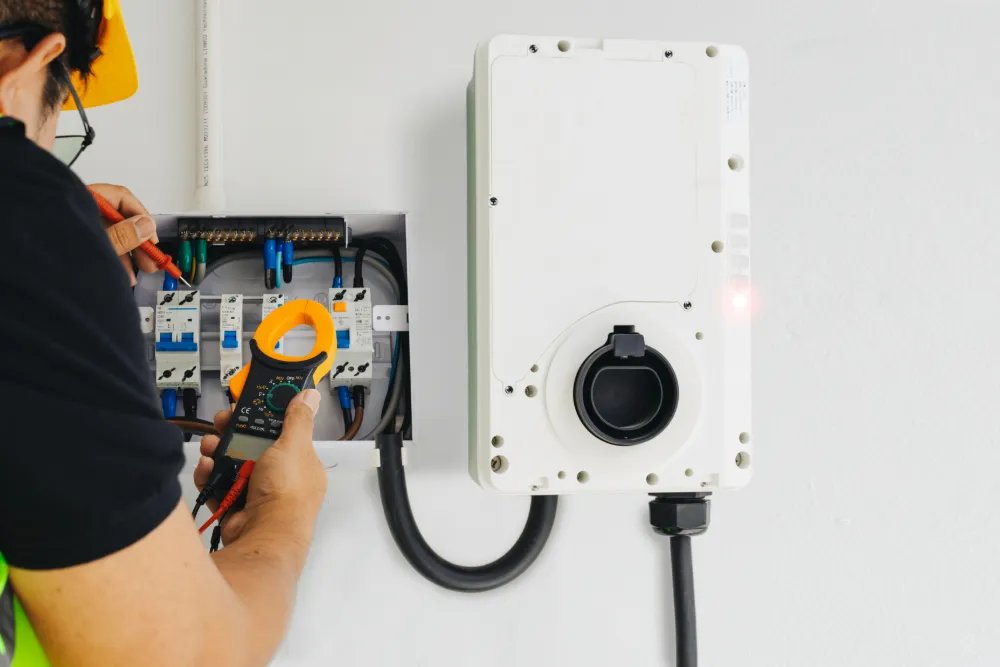
“My wife and I are very impressed with the service from Carroll Electric. I can honestly say they are hands down the best electric company I have ever worked with. We have called them for various projects in the past and will continue to use them for anything needed in the future.”
Brandon V. ★★★★★
Carroll Electric exists to provide high-quality electrical work while creating a customer experience built on transparency, communication, reliability, and craftsmanship. These principles guide every decision, from the first phone call to the final walkthrough.
01
Our rates are published on this website. You approve a written number before any work begins, and permits and parts are passed through at cost with the receipt attached.
02
Calls and messages answered the same working day. If we find something unexpected behind the wall, you get a phone call before we spend another dollar of your money.
03
We hold the date we gave you. Licensed, bonded and insured, permits pulled where they’re required, and we meet the inspector ourselves rather than leaving it to you.
04
Labelled circuits, dressed conductors, and a panel directory you can read at 6am. We photograph what goes behind the drywall so there’s a record long after we’ve gone.
We photograph every job as we go — partly so you have a record of what’s in your walls, partly because clean work is worth showing.
Old
New
Old
New
Every job gets photographed as we go. If you want to see work like yours before you commit, ask and we’ll send you the closest match we’ve done nearby.
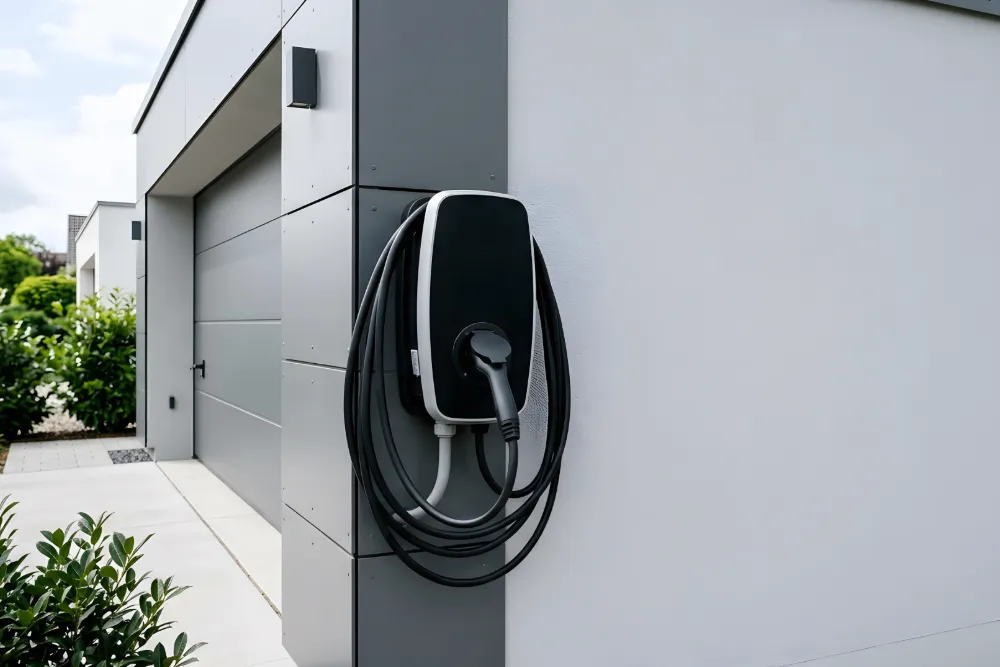
There are two ways to power a Level 2 charger, and the right one depends on the unit and on how long you plan to stay in the house.
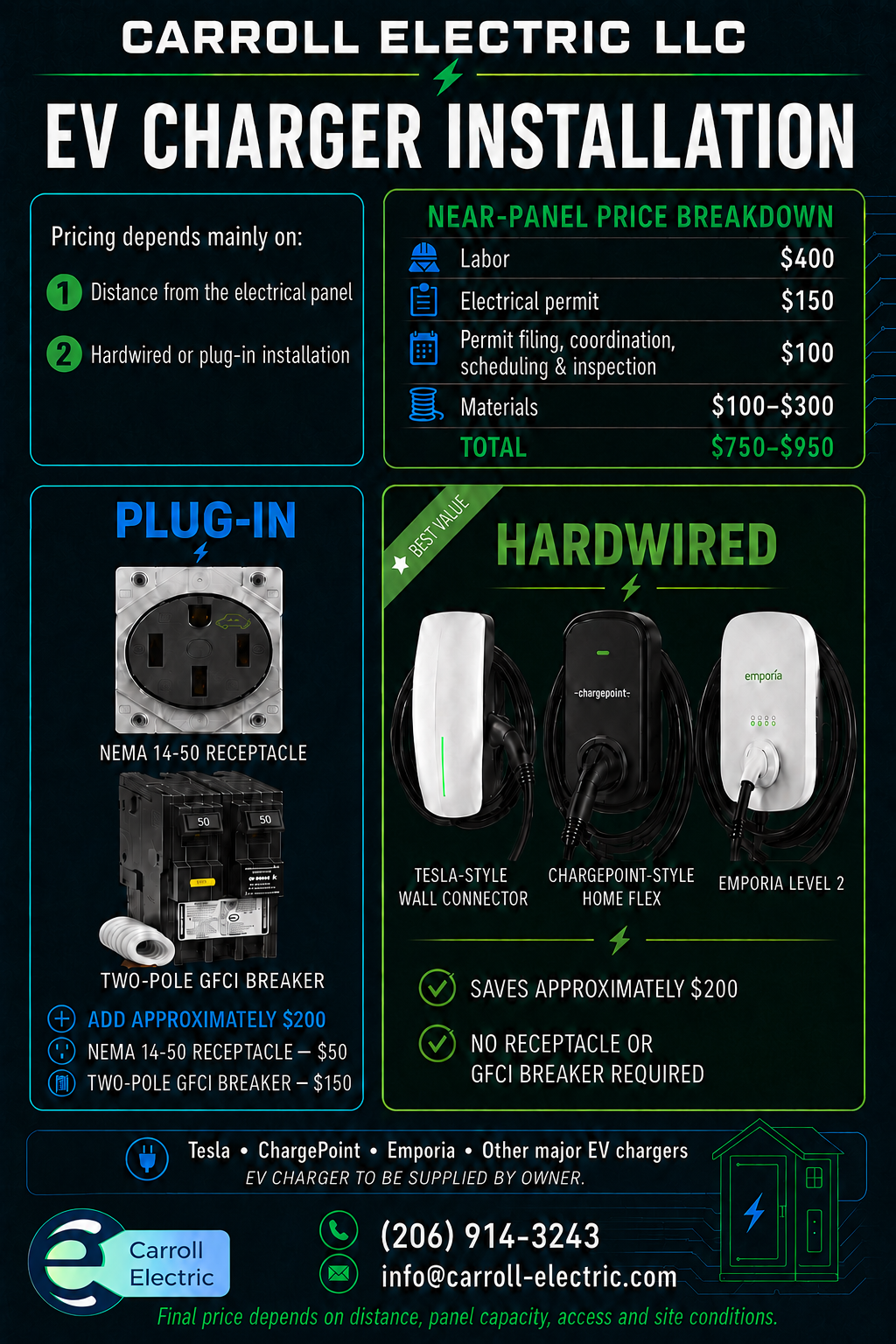
A 240-volt outlet — typically a NEMA 14-50, the same receptacle used for a range — lets you plug in a portable charger and unplug it when you move. It’s flexible and popular. It’s also limited: a 14-50 outlet on a 50-amp circuit supports a charger drawing up to 40 amps, and code requires GFCI protection on that receptacle, which occasionally causes nuisance tripping with certain charger models.
Hardwiring connects the charger directly to the circuit. It supports higher amperage — 48-amp and 80-amp units generally must be hardwired — avoids the receptacle GFCI issue, and makes for a cleaner permanent installation. The tradeoff is that the unit stays with the house.
Either way, the circuit gets sized to the charger and to what your vehicle can accept. There’s no benefit in paying for a 60-amp circuit to feed a car that accepts 32, though there’s often value in running conductors sized for future capacity while the walls are open. We’ll tell you when that’s worth it and when it isn’t.
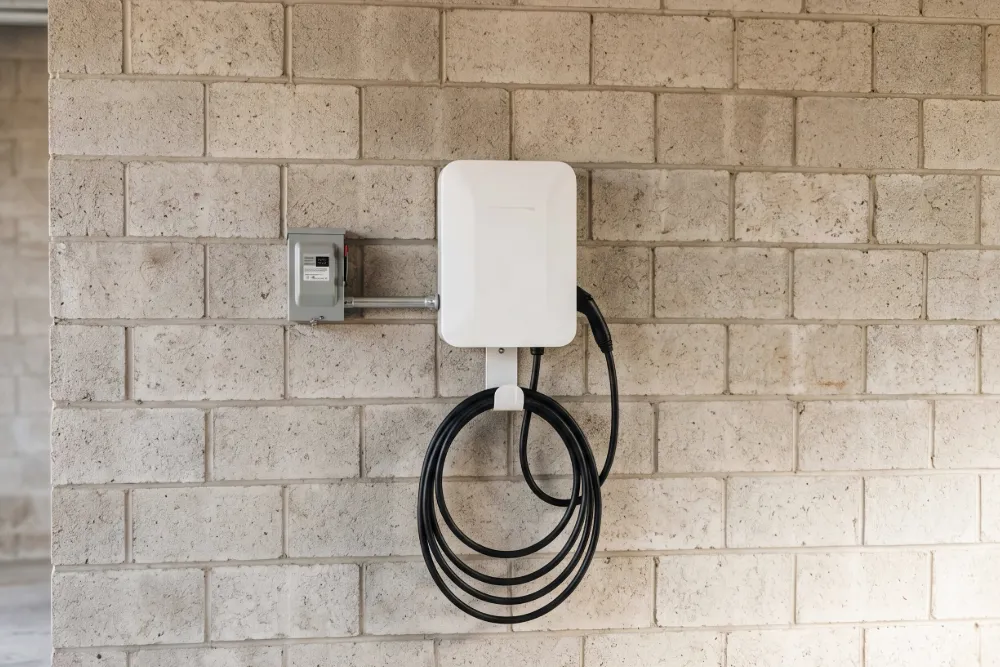
Any licensed electrician can land the job to code. What people remember is everything around it — whether you called back, showed up when you said, and left the place clean.
01
Rates are on this website. You approve a written number before we start.
02
Calls and messages answered same day. You always know who is coming and when.
03
An owner is on site or a phone call away on every project. No account manager in between.
04
Real photos of your job, not stock images of someone else’s. You see what went in.
05
Itemised quotes, permits filed, inspections logged, invoices you can actually read.
06
Labelled circuits, dressed conductors, a directory you can actually read at 6am.
07
Thermal imaging and circuit tracing find the fault instead of guessing at the drywall.
08
Marked van, branded shirts, and the same crew each visit. No mystery truck in the drive.
09
If a repair will hold another five years, we’ll tell you that instead of selling a rewire.
Where you park drives most of the cost variation, and it’s the first thing we look at.
An attached garage with the panel on a shared wall is the simplest case — a short run, minimal conduit, often a half-day job. Runs get longer when the panel sits in a basement or on the far side of the house, and longer still when the wire has to cross finished space rather than an attic or crawlspace.
Detached garages, carports, and parking pads are their own category. Feeding a detached structure usually means a trench, buried conduit, and often a subpanel at the far end, and the distance affects conductor sizing because voltage drop becomes a real factor on long runs. It’s very doable — we do it regularly in older Seattle neighborhoods where the garage sits off the alley — but it should be priced honestly rather than quoted like a garage-wall install.
Outdoor installations also need equipment rated for the location: weatherproof enclosures, proper conduit, and a charger listed for outdoor use. Most Level 2 chargers are, but not all, and it’s worth confirming before you buy.
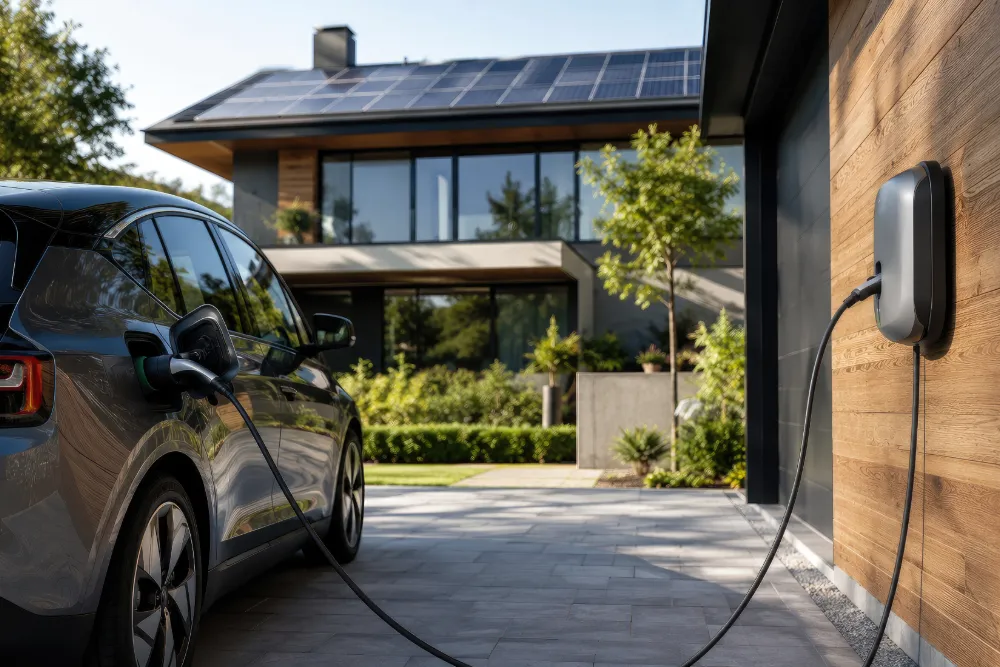
Carroll Electric also installs EV charging for commercial properties, apartment and condo buildings, and workplaces across Seattle, the north end, and the Eastside. Demand from tenants and employees has moved this from an amenity to something closer to an expectation, particularly on the Eastside.
Commercial installations involve larger service considerations, longer runs across parking areas, and often multiple chargers on a shared feeder with load management so the building’s service isn’t oversized for a peak that rarely happens. Multi-unit residential adds questions about metering and how charging gets billed back to residents, which is worth resolving early because it affects the electrical design.
Property managers and building owners receive the same process as every other client: an on-site assessment, an itemized written estimate before work begins, and code-compliant installations with permit and inspection records for your files. Work can be phased as demand grows — running capacity for future stations during the first installation costs far less than trenching the same parking lot twice.
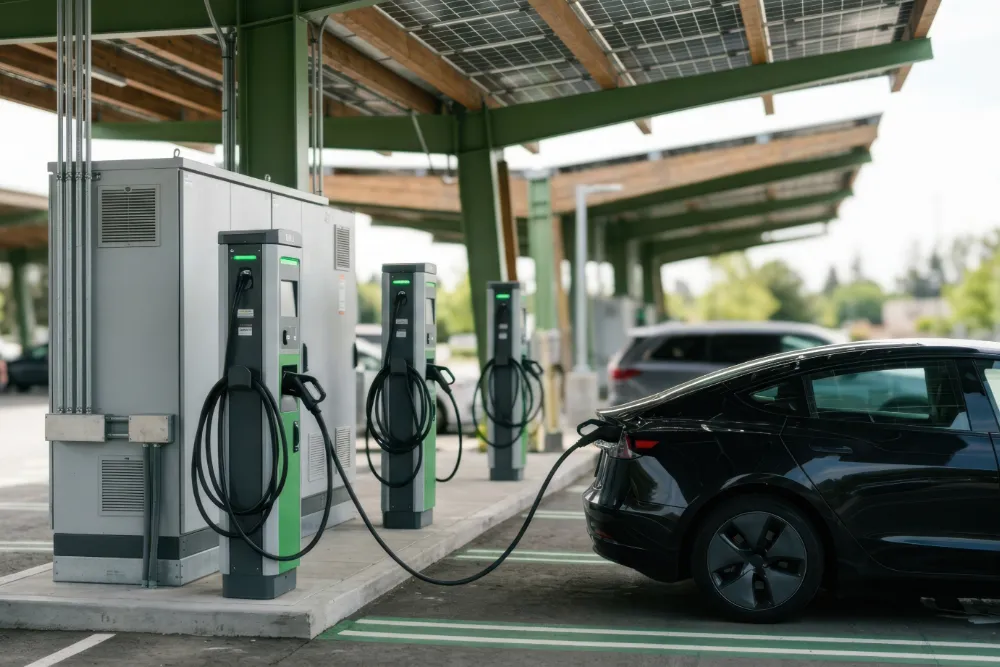
We’d rather explain pricing than have you ask for it. EV charger installation costs come down to a few specific variables: the distance from your panel to the charger location, what the run passes through, your panel’s available capacity and whether any panel or service work is needed, the amperage of the circuit, whether the installation is hardwired or an outlet, and whether a detached structure requires trenching.
Your estimate breaks those out in plain terms, with labor and materials listed separately, so you can see how the number was reached. When a panel or service upgrade is part of the conversation, it’s priced as its own line rather than folded in. Nothing appears on the final invoice that wasn’t in the estimate.
Washington requires a permit and an inspection for essentially all new and altered electrical work, and a new 240-volt circuit for an EV charger is squarely in that category. Which office issues the permit depends on where the property is. Seattle runs its own electrical permitting and inspection program through the Department of Construction and Inspections, and the work is held to the Seattle Electrical Code — the city’s own amended edition of the National Electrical Code. Outside cities that operate their own programs, permitting and inspection are handled by the Washington State Department of Labor & Industries. We work in both systems regularly and pull the permit from whichever authority governs your address.
Handling the permit isn’t a convenience we offer — it’s the law. When you hire an electrical contractor in Washington, that contractor is required to purchase the permit for the work they perform on your property. If someone quotes you a charger installation and suggests skipping the permit to save money, that’s a signal worth paying attention to.
On EV charging specifically, the permit record does more than satisfy the inspector. Utility and manufacturer rebate programs frequently require proof of permitted, professionally installed work, and an unpermitted high-amperage circuit is exactly the kind of thing that surfaces during a home sale. Inspection also catches the failure modes that matter on a circuit running at full load for hours at a stretch — undersized conductors, loose terminations, and improper protection.
We do the work to a standard we’re confident will pass the first time, schedule the inspection as part of the project, and hand you the records at the end.
Published, not quoted on the doorstep. Builders and repeat clients pay less because the work is easier to plan — you’ll see exactly which rate applies to you before we start.
Residential
Builder / Contractor
$100/hr
Repeat Client
$110/hr
First Time
$125/hr
Emergency
$125–$250/hr
Commercial
Builder / Contractor
$125/hr
Repeat Client
$150/hr
First Time
$175/hr
Emergency
$150–$300/hr
Trip Fee One low trip fee. No surprises.
Within 10 miles
$50
Within 20 miles
$75
20+ miles
$100+
New EV owners who need charging at home before the car arrives. Households adding a second electric vehicle. Homeowners who’ve been getting by on Level 1 and are tired of it. Buyers and sellers where a charger is part of the transaction. Builders and remodelers roughing in capacity for future charging. Property managers and condo boards adding charging for residents. Employers installing workplace charging. And anyone who plugged in a charger and found the breaker won’t hold.
A low number is easy to say. These are the commitments that come attached to it, on every service upgrade and panel swap we do.
Your power is out for a maximum of six hours on the day of the swap. We plan the shutdown around your schedule.
We meet the inspector ourselves and clear the permit within five business days of finishing.
Any additional install or relocation the upgrade makes necessary is done free of charge. Not billed as a change order.
Bring us a written quote and we will meet it at minimum. In most cases we come in 25 to 50 percent lower.
Bonus
A free small install or troubleshoot with every upgrade.
A new light fixture, dimmers, outlets, or a fault you have been meaning to chase down — while we are already on site.
Carroll Electric is a licensed electrical contractor serving Seattle, the north end, and the Eastside. We’re a small, hands-on family crew, and the person who quotes your job is typically the person on site doing the work. You receive an itemized estimate before anything begins, we size the circuit to what your household actually needs rather than to the biggest number we can sell, we install to code the first time, and we test the charger with your vehicle before we leave. Our focus is on giving you the information to make a confident decision — not on selling you more than you need.
Call or text us at (206) 914-3243 to talk through your electrical service.
“Highly recommend Carroll Electric! Cameron provided outstanding service from start to finish. His pricing was incredibly reasonable, and he managed the entire project seamlessly — including coordinating directly with the inspector to ensure everything went smoothly. The work was completed exactly on time, and the quality is top-notch.”
Niket A. ★★★★★
And surrounding areas throughout King and south Snohomish Counties.
Whether it’s a failed meter base or a full electrical service upgrade with utility coordination, Carroll Electric has the licensing and experience to complete the work correctly. Contact us to schedule an assessment.
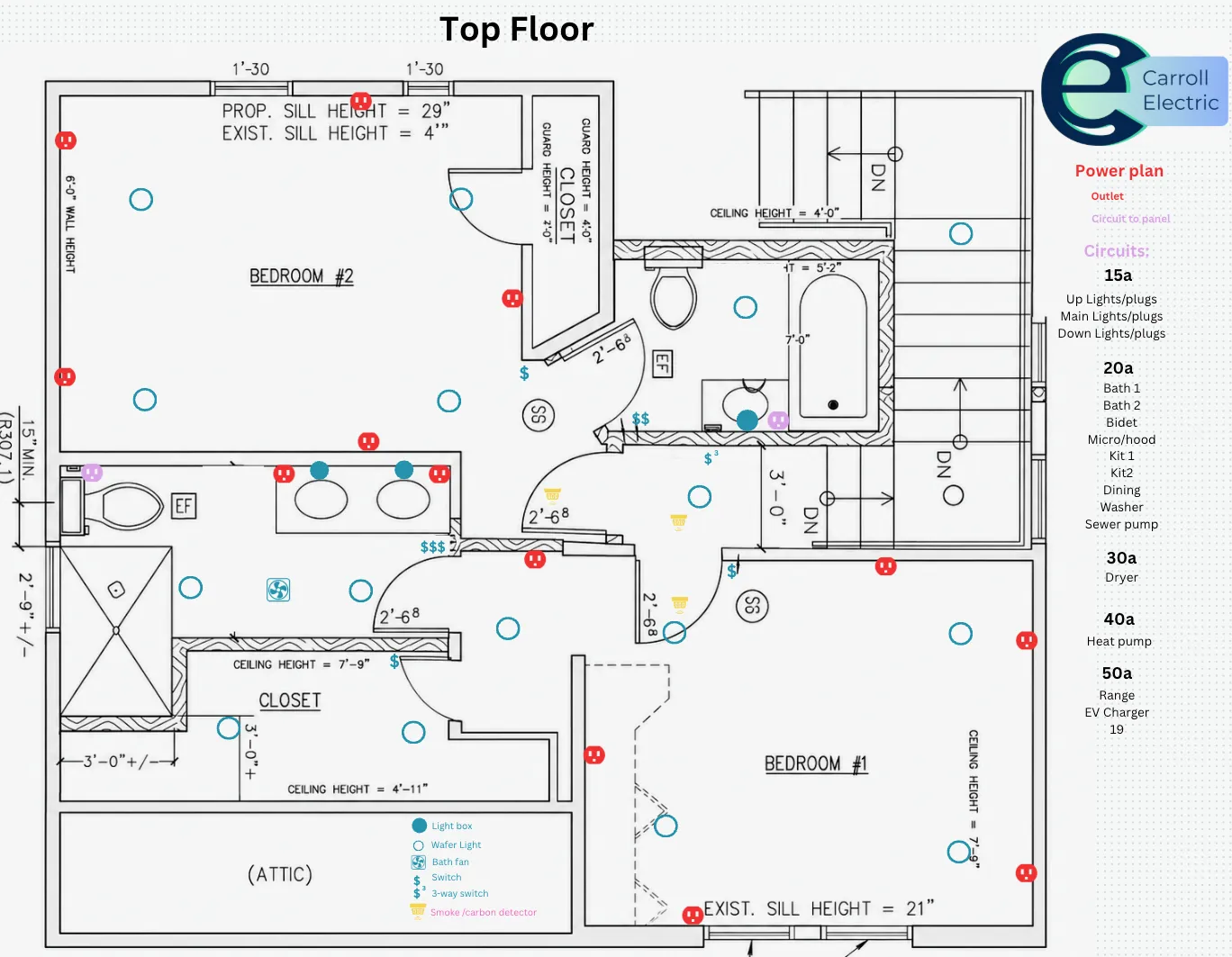
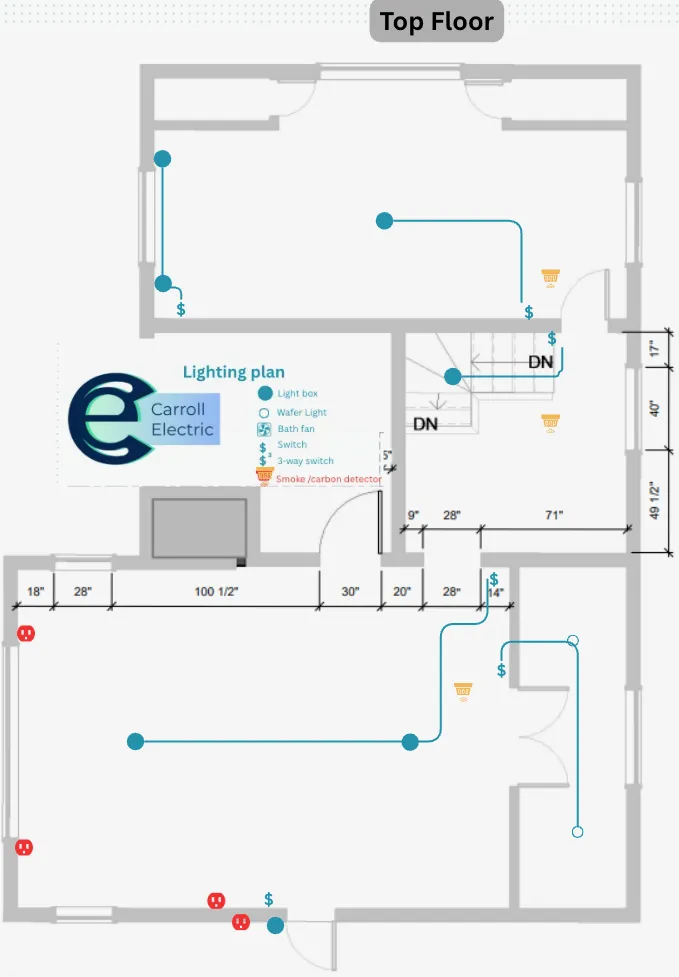
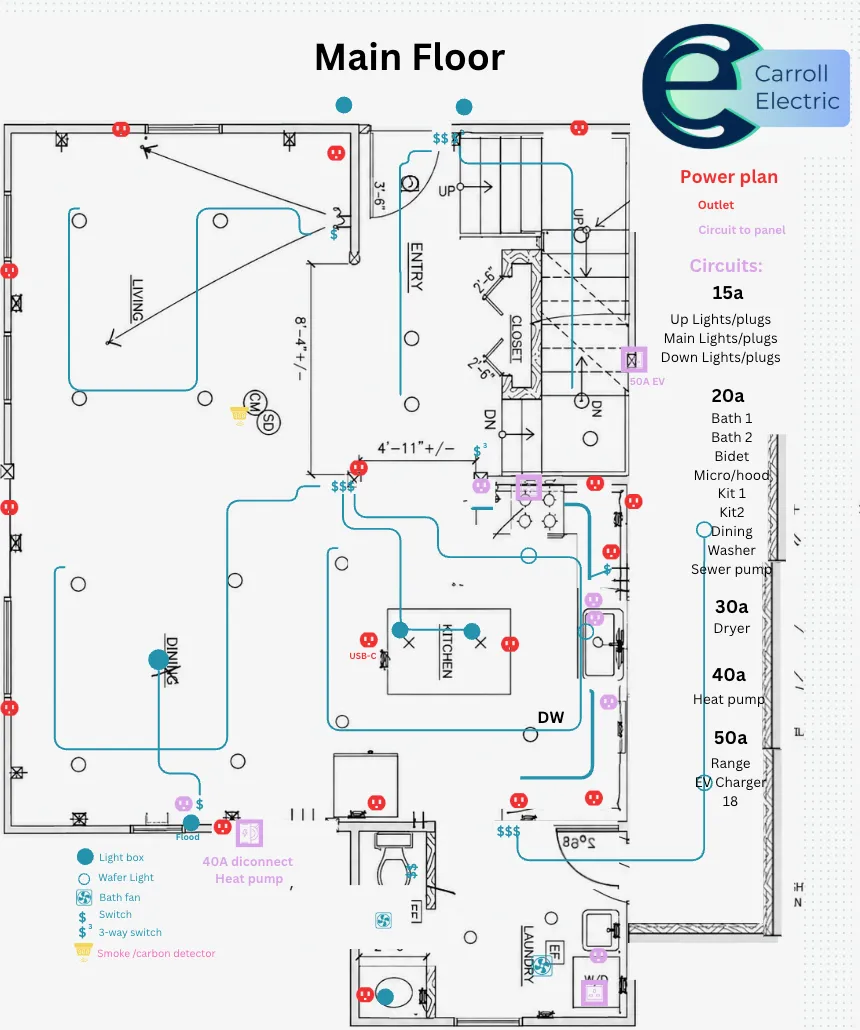
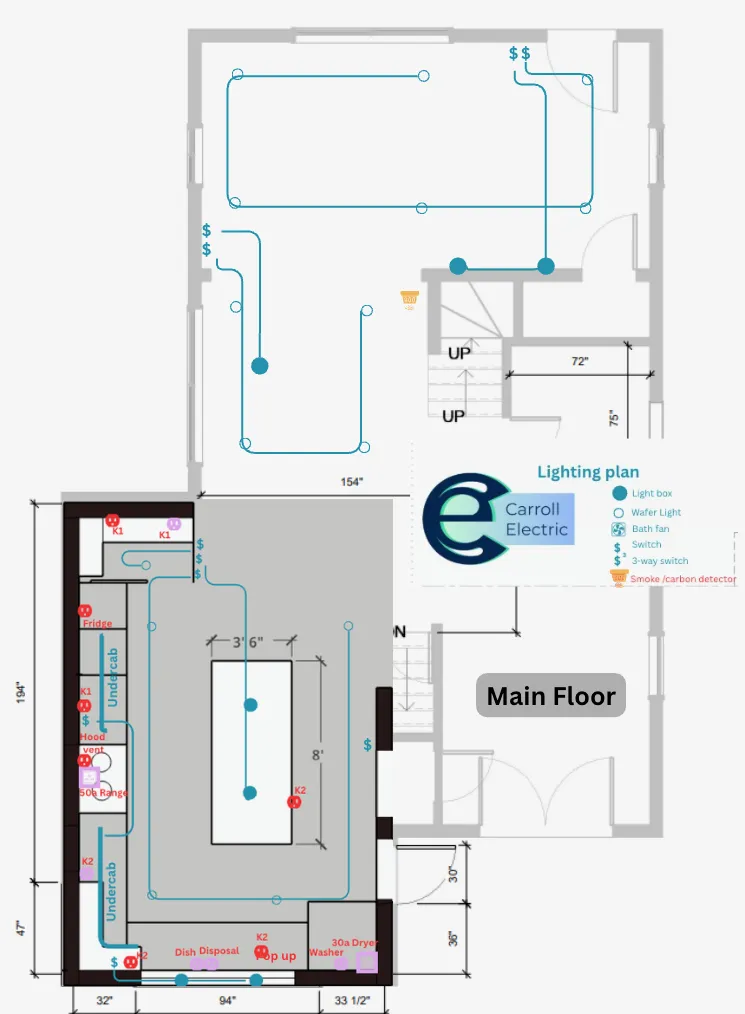
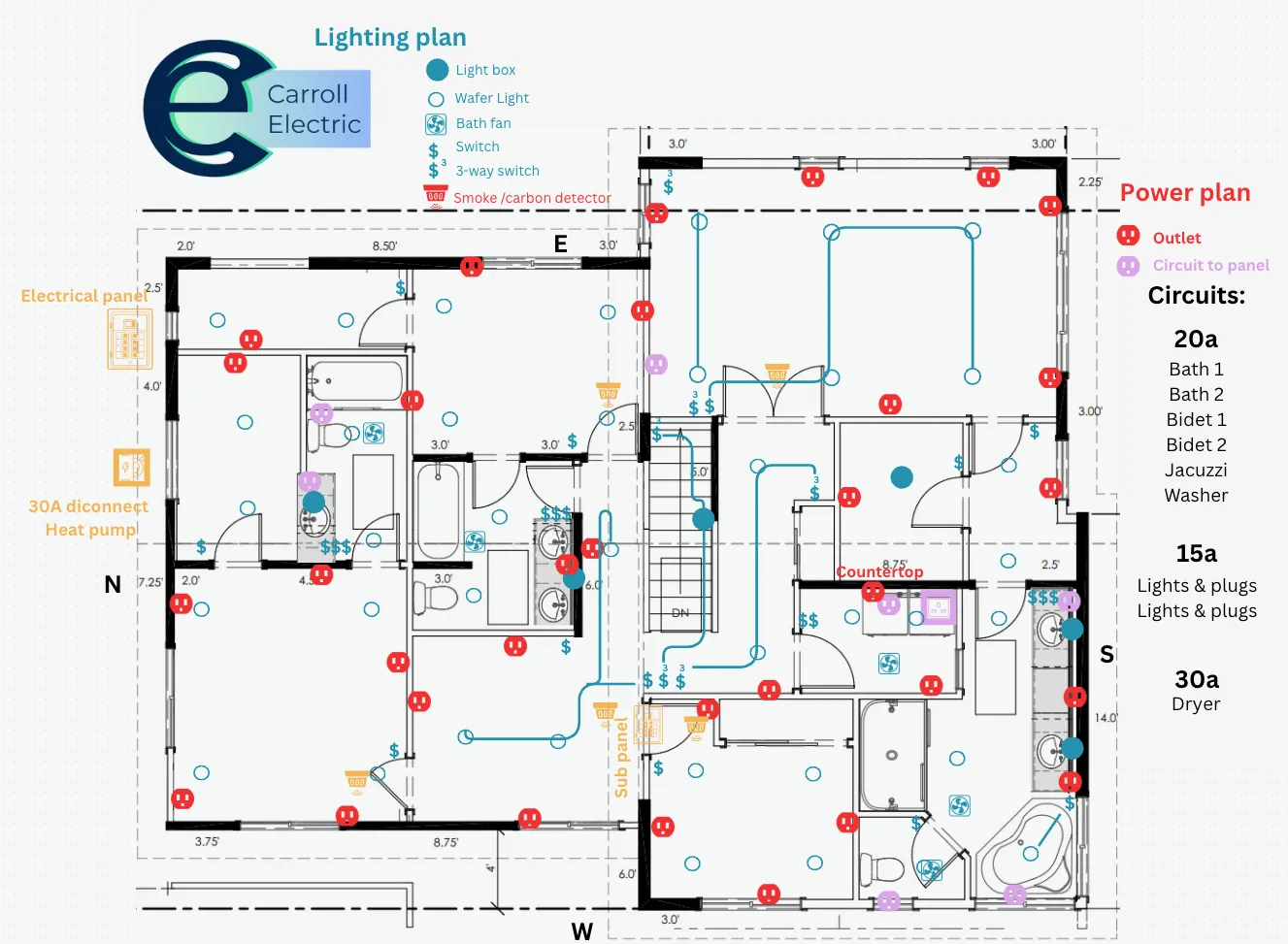
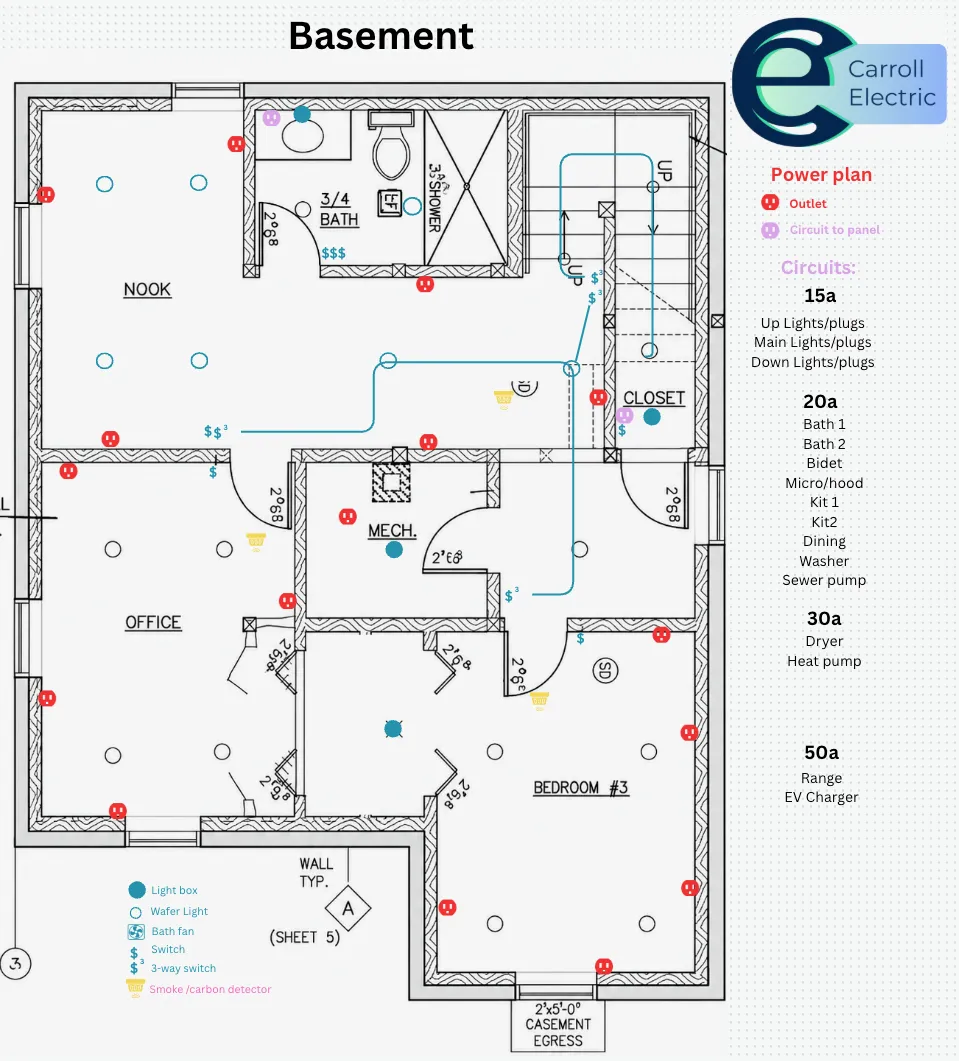
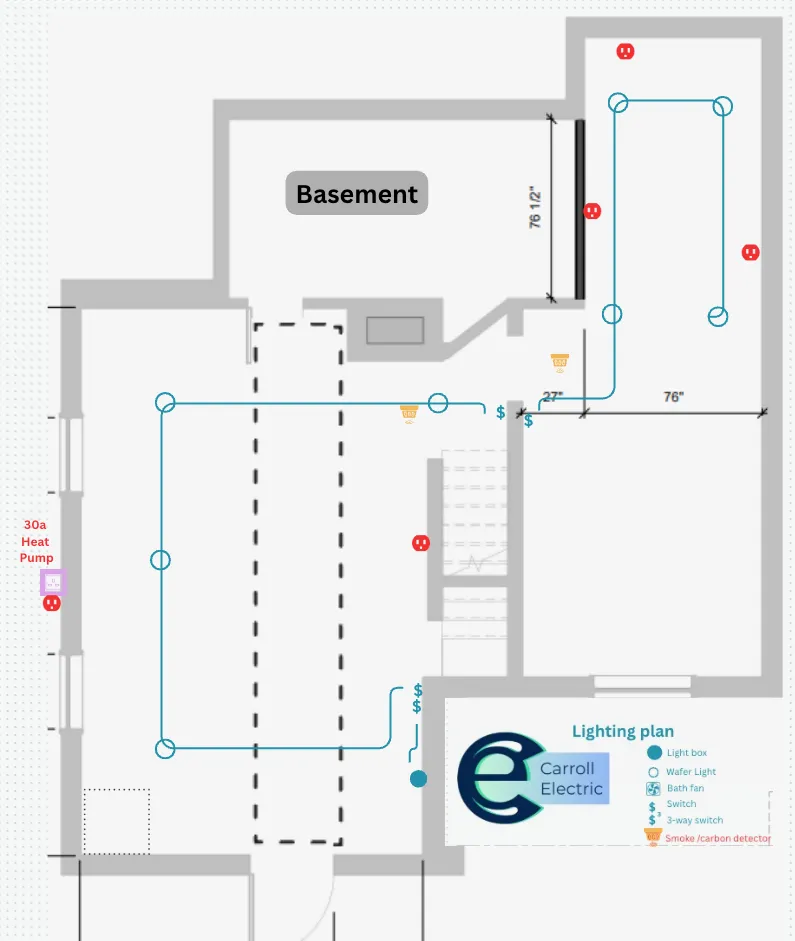
See real project examples and our straightforward hourly rates.
King County:
Seattle (98115, 98082, 98125, 98165, 98105, 98175, 98195, 98112, 98103, 98113, 98122, 98109, 98117, 98127, 98139, 98141, 98194, 98107, 98101, 98119, 98111, 98170, 98181, 98185, 98190, 98191, 98164, 98161, 98154, 98104, 98121, 98174, 98160, 98199, 98134, 98118, 98108, 98116, 98106, 98126, 98136, 98178, 98168, 98131, 98199, 98141, 98181, 98170, 98145, 98138, 98129, 98124
Bellevue (98004, 98005, 98009, 98015, 98007, 98008, 98006), Bothell (98034, 98011, 98041, 98021, 98012), Mercer Island (98040, 98118), Newcastle (98056, 98059), Issaquah (98029, 98027, 98075), Kenmore (98028, 98125, 98155), Kirkland (98034, 98033, 98133, 98102, 98114, 98124, 98129, 98138, 98145, 98144, 98083), Lake Forest Park (98155), Medina (98039, 98039), Redmond (98052, 98073, 98053, 98008, 98033), Renton (98056, 98059, 98055, 98057, 98058, 98178), Richmond Beach (98177), Sammamish (98074, 98075, 98008, 98029), Shoreline (98155, 98133, 98177, 98160), Woodinville (98072, 98077)
Snohomish County:
Bothell (98034, 98011, 98041, 98021, 98012), Edmonds (98020, 98006, 98026), Everett (98208, 98204, 98208, 98203, 98213, 98201, 98207, 98275, 98203, 98290, 98206, 98272), Lynnwood (98036, 98046, 98037, 98087, 98037), Mill Creek (98012, 98082), Mountlake Terrace (98043, 98043), Mukilteo (98275), Snohomish (98296, 98291, 98290)
Seattle Neighborhoods:
North Seattle: Ballard (98107, 98117), Broadview (98177. 98133), Bitter Lake (98133), Blue Ridge (98177, 98133), Bryant (98223), Crown Hill (98117), Fremont (98103, 98107), Green Lake (98103, 98115), Greenwood (98103, 98117, 98133), Hawthorne Hills (98105, 98115), Lake Union (98109), Laurelhurst (98105), North Beach (98117), North College Park (98103), Northgate (98125, 98133), Northlake (98103), Phinney Ridge (98103, 98107, 98117), Ravenna (98105, 98115), Roosevelt (98115), Sand Point (98115, 98105), University District (98105, 98115, 98195), University Village (98105), Wallingford (98103), Wedgwood (98115), Windermere (98105, 98115), View Ridge (98115)
Northgate: Haller Lake (98133, 98125), Lake City (98125, 98115), Maple Leaf (98115), Pinehurst (98125)
Lake City: Cedar Park (98125), Matthews Beach (98115, 98125), Meadowbrook (98125m 98115, 98155), Olympic Hills (98125), Victory Heights (98125, 98115)
Ballard: Adams (98107), Loyal Heights (98117), Sunset Hill (98117, 98107), West Woodland (98107), Whittier Heights (98117)
Central Seattle: Cascade (98109), Capitol Hill (98102, 98112, 98122), Eastlake (98102), Interbay (98119, 98199), Lake Union (98109, 98102, 98103), Queen Anne (98109, 98119), Westlake (98109)
Magnolia: Briarcliff (98199), Lawton Park (98199), Southeast Magnolia (98199)
Capitol Hill: Broadmoor (98112), Broadway (98122, 98102), Interlaken (98112), Madison Park (98112), Madison Valley (98112, 98122), Montlake (98112), Pike-Pine Corridor (98122, 98101), Portage Bay (98102, 98105), Roanoke (98102, 98112), Renton Hill (98057), Stevens (98112)
Central Seattle: Atlantic (98144, 98134), Central Area (98122, 98144), Central District (98122, 98144), Cherry Hill (98122), Denny-Blaine (98112), Downtown (98101, 98104, 98113, 98121, 98141, 98154, 98161, 98165, 98170, 98174, 98175, 98181, 98185, 98190, 98191, 98194), , Judkins Park (98144, 98122), Leschi (98122, 98144), Madrona (98122), Mann (98122), Minor (98122, 98144), Squire Park (98122, 98144), Washington Park (98112)
Downtown Seattle: Belltown (98121, 98101, 98109), Central Business District (98101, 98104, 98164, 98121, 98154), Central Waterfront (98101, 98104, 98121, 98134), Chinatown-International District (98104), Denny Triangle (98101), First Hill (98104, 98122, 98101), Pike-Market (98101), Pioneer Square (98104, 98134), West Edge (98101), Yesler Terrace (98104, 98122)
South End: Atlantic City Beach (98118), Brighton (98118), Beacon Hill (98108, 9811, 98144), Columbia City (98118, 98108), Dunlap (98118), Georgetown (98108), Harbor Island (98134), Hillman City (98118), Holly Park (98118), Industrial District (98134, 98108), Lakerridge (98178), Lakewood (98144), Mount Baker (98144), New Holly (98118, 98108), Othello (99344, 99327, 99332), Rainier Beach (98118, 98178), Rainier Valley (98118), Rainier View (98178), Seward Park (98118), SoDo (98134), South Park (98108), Van Asselt (98108)
West Seattle: Admiral District (98116, 98126), Alaska Junction (98116, 98126, 98136), Alki Point (98116), Arbor Heights (98146, 98126, 98136), Delridge (98106, 98126), Fairmount Park (9811, 98126, 98136), Fauntleroy (98136, 98116, 98126), Gatewood (98136), Genesee (98116, 98126), Mee-Kwa-Mooks (98116), North Admiral (98116), North Delridge (98106. 98126), Seaview (98136), West Seattle Junction (98116)
Delridge: High Point (98126, 98106), Highland Park (98106, 98108), Riverview (98106), Roxhill (98126, 98106), South Delridge (98126, 98106)
This is the part that determines whether a charger installation is simple or complicated, and it’s worth understanding before you shop for equipment.
An EV charger is one of the largest continuous loads a house carries. Because it runs for hours at a time, code requires the circuit to be sized at 125 percent of the charger’s rated draw — a 40-amp charger needs a 50-amp circuit. That’s a meaningful addition to a panel that’s already serving a kitchen, laundry, heat, and everything else.
We run a load calculation on your existing service to determine what’s actually available. Many homes have more room than the owner expects. Others, particularly older houses across north Seattle, Shoreline, and Lynnwood still on 100-amp service, are genuinely close to their limit.
When capacity is tight, a service upgrade isn’t the only answer. Sizing the charger down to 32 amps instead of 48 often fits comfortably and still adds far more range overnight than anyone uses in a day. Load management devices can allow a charger to share capacity by throttling when other large loads are running. A meter-mounted or panel-integrated solution can sometimes avoid a full upgrade entirely. We’ll lay out the options with pricing for each rather than defaulting to the largest project.
Most electricians won’t give you a number until someone is standing in your space, and there’s a reason for that — an honest price depends on what’s actually there. But that’s not much help when you’re trying to budget. So here are real quotes from recent work instead.
Look at what’s in them. Rough-in and trim-stage work priced separately, so you can see the two halves of the job. Every item listed individually, so if you add something, remove something, or change your mind, the number moves by a specific amount instead of becoming a conversation. And where existing circuits are safe and serviceable, they’re listed by name — the work we’re not charging you to redo, written down where you can check it.
That’s what a calculated price looks like. Nothing padded to cover a worst case, nothing priced low to get in the door. When you can see how a number was built, you can tell whether it’s fair.
Tap any quote to read it full screen
Your project will differ, and the assessment is what produces an accurate number — but this is how we build one.
Cost depends on the distance from your panel to the charger, what the run passes through, your panel’s available capacity, the circuit amperage, and whether trenching or panel work is needed. We provide an itemized written estimate after an on-site assessment, with labor and materials broken out separately. Call or text (206) 914-3243 to schedule an assessment.
Yes. A new 240-volt circuit requires a permit and inspection. Inside Seattle, the permit comes from the city’s Department of Construction and Inspections; in jurisdictions without their own program, it comes from the Department of Labor & Industries. Carroll Electric pulls the permit and schedules the inspection as part of the project, which is what state law requires of the contractor doing the work.
Often, but it depends on your service size and how much capacity is already in use. We run a load calculation rather than estimating. If capacity is tight, options include sizing the charger down, adding load management so the charger shares capacity with other large loads, or upgrading the service. We’ll price the options rather than defaulting to the largest one.
It depends on the scope. A straightforward circuit in an attached garage is at the simpler end, while longer runs, detached structures requiring trenching, and installations that need panel or service work take more time. We’ll walk you through the expected sequence at the assessment and give you a timeline with the estimate.
Typically twenty to forty miles of range per hour, depending on the circuit size, the charger, and what your vehicle’s onboard charger accepts. The car’s limit governs — a vehicle that accepts 32 amps won’t charge faster on a larger circuit.
No. If you already have one, we’ll install it. If you haven’t bought yet, we’ll tell you what your electrical supports so you can choose a unit that matches rather than returning something that doesn’t.
Yes. That usually means a trench, buried conduit, and often a subpanel at the structure, with conductors sized for the distance to control voltage drop. It’s common work in older neighborhoods where the garage sits off the alley. It costs more than a garage-wall installation, and we’ll price it honestly at the assessment.
Often, though it involves the building’s electrical capacity, the route to your stall, and approval from the HOA or building owner. Buildings adding multiple stations typically use load management on a shared feeder. We work with property managers and boards on both single-stall and building-wide installations.
Not necessarily. Many homes have adequate capacity, and where they don’t, a smaller charger or load management often resolves it without upgrading the service. Older homes still on 100-amp service are the most likely to need one. We’ll tell you which applies after the load calculation, before you’re committed to anything.
Carroll Electric provides EV charger installation to homeowners, contractors, and businesses throughout Seattle, Shoreline, Bothell, Lynnwood, Kirkland, Bellevue, Redmond, Sammamish, Issaquah, and surrounding communities across King and south Snohomish Counties.
Our approach to every project is the same: the right circuit, sized correctly, installed to code, tested with your vehicle, cleaned up, and documented clearly. We’re a small family crew, so you’re working with the people doing the work rather than being handed between a salesperson, a scheduler, and whoever is available. That’s what stands behind two brothers, one mission — do the job right, at the right price.
Reach out today to schedule your appointment.